
This will contain spoilers for Pyre, Many Nights a Whisper and The Dark Queen of Mortholme.
Most video games take the form of challenges to overcome- enemies to defeat, pits to jump over, puzzles to solve, stuff like that. In order to complete Super Mario World, you’ll need to master every level. If you want to see the conclusion of Clair Obscur: Expedition 33, you need to defeat the final boss. I’ve been playing video games for over 30 years, and that means I have over three decades of conditioning to the idea that not only are good games fair and beatable, but that winning is the only way forward. In recent years, however, several games push back on that conditioning by asking some interesting questions- what if I lost and the game moved on? What if the game’s narrative themes hit harder if I lost? And even if it is narratively awesome, can I truly accept it?
Supergiant Games’ Pyre (2017) takes place in a sort of underworld hellprison called The Downside, and is built on a ritualistic sequence of rites that take the form of athletic competition; think a mashup of rugby and basketball, or that one game on American Gladiators where they tried to put little basketballs into receptacles at either end of the arena. Victory in certain rites guarantees a return topside and integration into high society, so that becomes your main goal as a player- win the rites and earn freedom. Pyre’s twist is that your opponents have the same stakes, and if they win, you’ll have to watch one of their players ascend to freedom in your place. Supergiant’s Greg Kasavin stated in an interview that this was one of the questions that they followed in the concept phase- what happens when you lose? Just as it hurts to watch your opponent hoist the trophy in real sports, it’s painful watching someone else take one of your limited opportunities to go free.
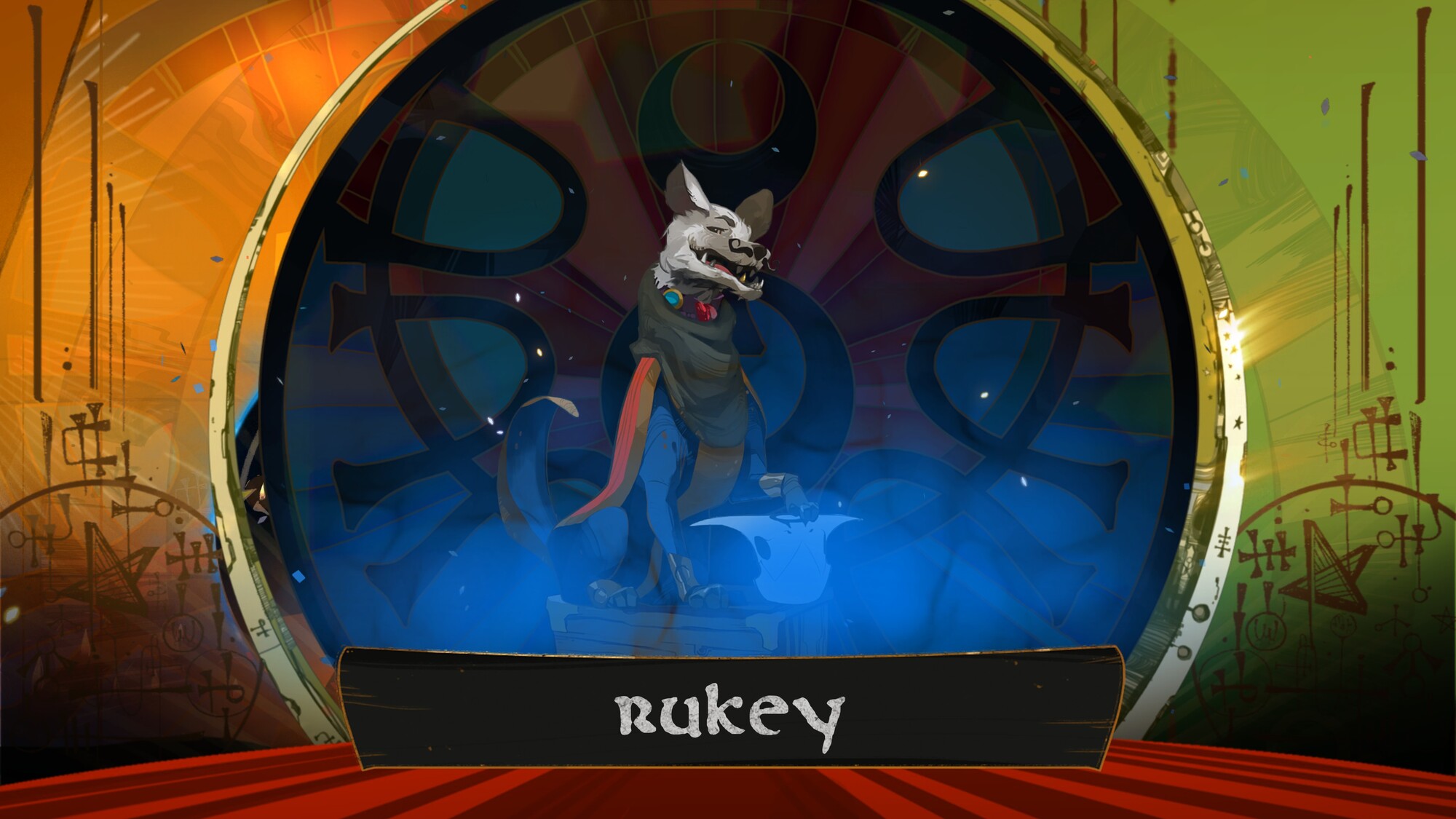
Across my two playthroughs of Pyre, I lost two of those liberation rites. Both times, as I watched that shot at freedom slip away, I wasn’t thinking of the fantastic narrative implications of someone else making it out of The Downside. I wasn’t thinking of the confidence on the part of the developer to build out a complicated storyboard based on who goes free and who doesn’t. The only thing I could think of at the time was…this isn’t fair! This is bullshit! That guy just ran 6 inches to the left of the character defending the pyre, just step to the right COME ON! Why is the enemy AI so perfect?? FUCK!!!
It was only in the wagon after the rite, decompressing with my companions after the end, when it sank in. We’re all disappointed. We wasted a chance. The leader of the opposing team is up there, and all of us are still down here. But the stars are shining again, which means we have more rites coming up. For those who have played organized sports, you know the feeling. You lost a game, you’re pissed off, but you have another game in a few days. It’s time to turn the page forward. Indeed, Pyre’s greatest strength lies in the way that the stakes of these rites could not be higher, but the game doesn’t play by normal video game rules. If you lose, the story moves on, and the story should move on. Don’t reach for that quick load- sit with your disappointment, regroup and try to do better the next time. For Pyre to truly fire on all cylinders, the player needs to accept the idea that they might lose, and they need to choose a difficulty level that allows that possibility. For more on that, consider checking out the episode of Tales from the Backlog!
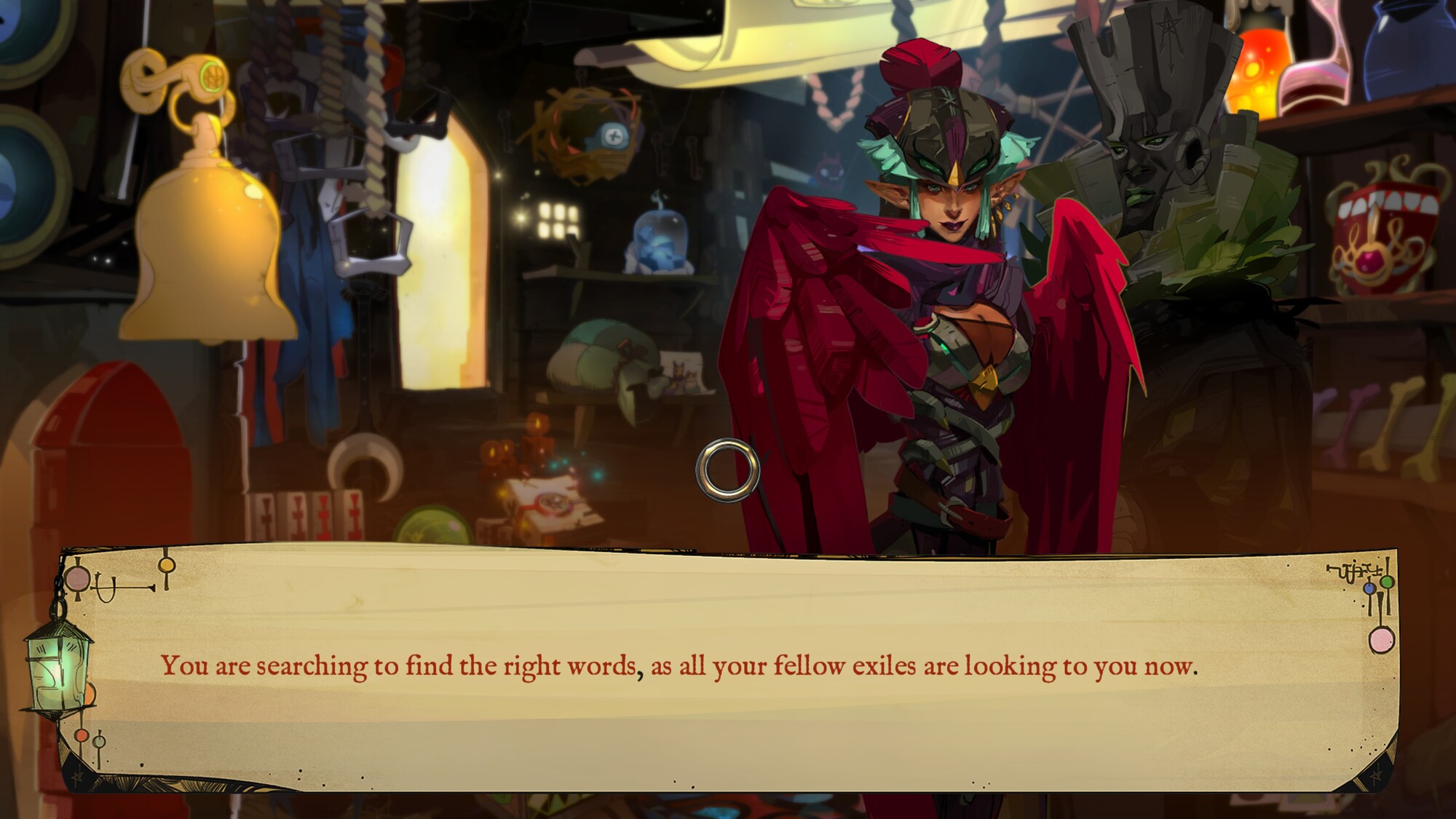
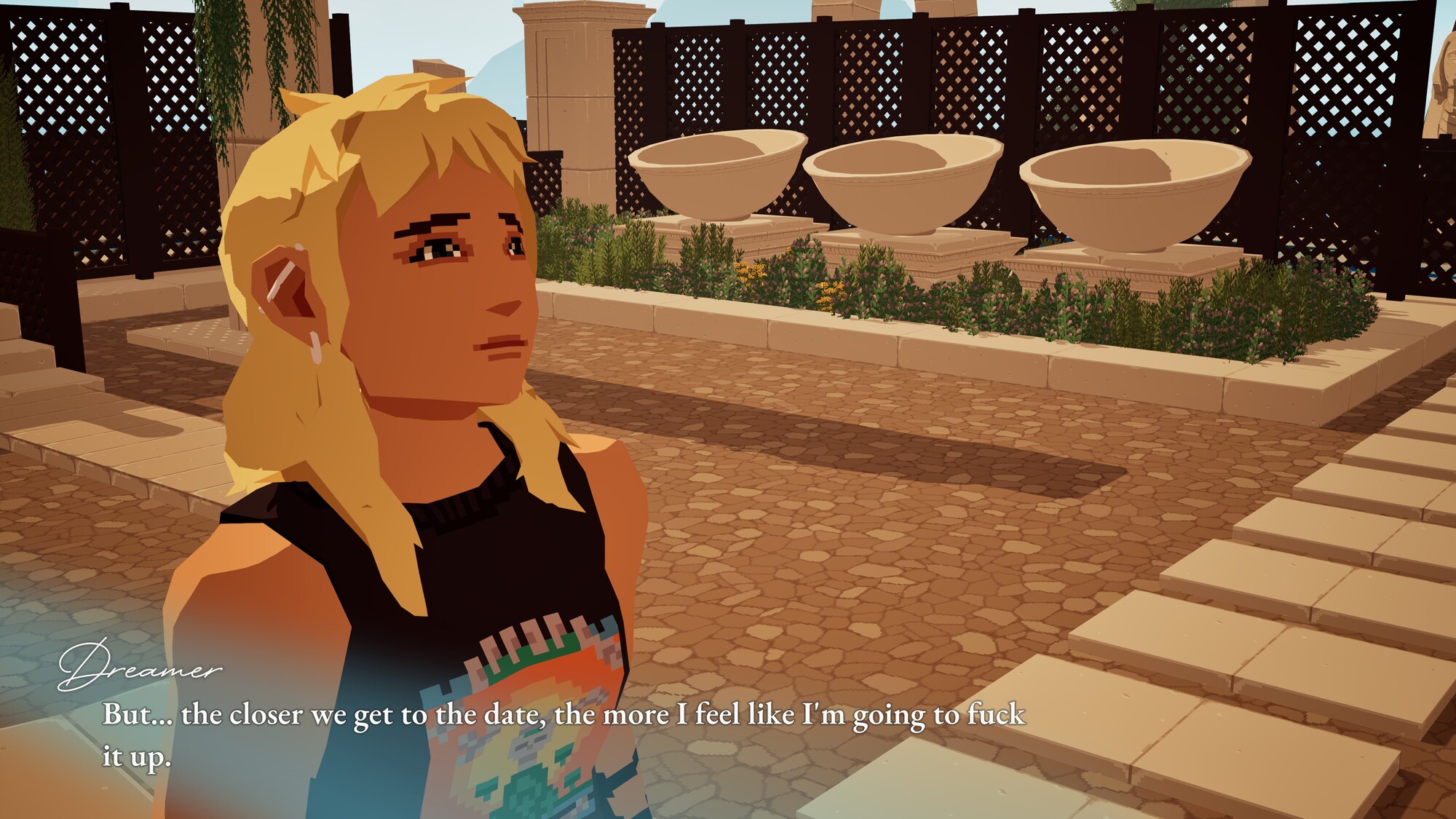
So Pyre asks you to accept the idea that you might lose a rite here and there and that the story will move on regardless, but there are dozens of rites in a single playthrough. What if there was just one? Selkie Harbour and Deconstructeam’s Many Nights a Whisper (2025) takes that same concept and condenses it. Many Nights a Whisper pins its narrative stakes not on a series of chances, but a single one. In the game, you play as a character called The Dreamer, set to take part in a once-per-decade ritual where the Dreamer must shoot a fireball into a chalice set in the ocean at an impossibly long distance. The bulk of the game’s ~90 minute runtime takes the form of shooting practice during the day and fielding wishes from the people at night. If the Dreamer makes the shot at the end, all of the wishes they chose to grant will come true. If they miss, the wishes will never come true. No pressure, right?
As you practice and prepare for the shot, the Dreamer’s mentor gives them advice, often centering around the idea that their life does not end with the ritual. Life goes on regardless of whether you make or miss the shot, so you need to internalize the idea that you might miss, and at some level, be at peace with either result. And let me tell you, it’s so easy to read the mentor’s advice and say to yourself “sure, I’m cool, this is just a video game anyway, I’m gonna hit the shot anyway so fuck it we ball”. And it’s no big deal to read the game’s fourth-wall breaking message that warns you that you can’t save scum this (your save file is deleted when you load into the final ceremony). Your shot is your shot, and your result is your result…make or miss. And as I approached the final shot with sweaty palms, lined it up with all of the sight lines and angles I’d practiced, pulled back on the slingshot and prepared to let loose, I told myself I was prepared for the result, no matter what. I let go of the shot and watched it fly…
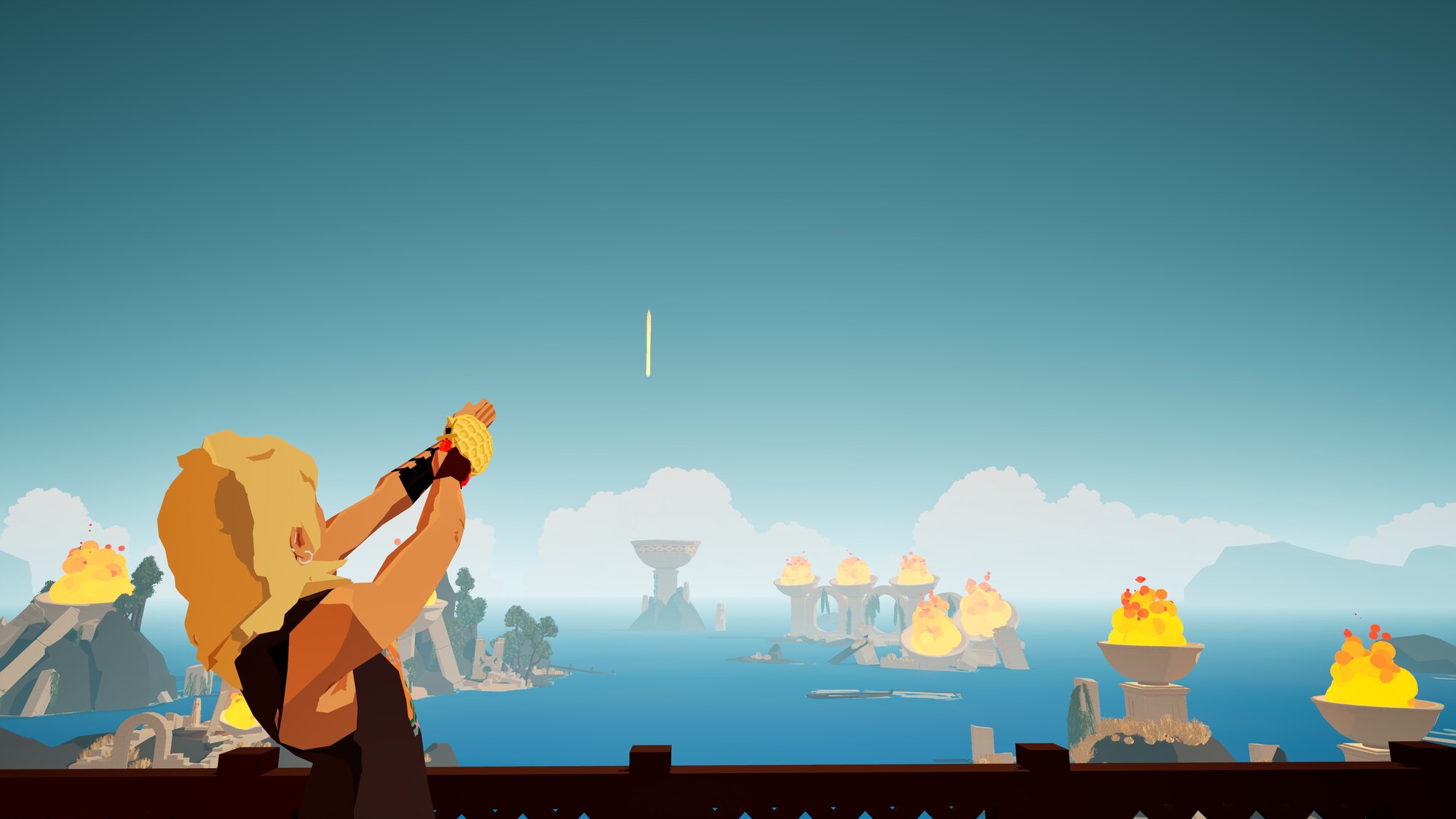
….way off-line to the left. Calamity. Not only had I missed the shot, I had missed BADLY. The Dreamer sank to their knees, the screen started shaking, and all of that zen about the result once again flew out the window. How could this happen? I made 33 straight shots in practice the day before, I lined it up the same way, my mouse hand was steady, there must be some funny business at play here! How could I have possibly missed? I even turned to the age-old “crash out on Discord” technique to deal with failure for a few minutes. Even as the credits rolled, I was still reaching for every conceivable reason why I could have missed, other than the most obvious truth- I had just fucked it up! The pressure got to me, and I biffed it.
Once again, a game had spent nearly its entire runtime preparing me for the possibility of failure, and once again, when I actually failed, I reached for some way to shift the blame away from myself. Disappointment is not a feeling that most games attempt to produce, and even in difficult games, you usually just replay the level or boss fight until you overcome it and move on. You’re playing as The Hero, The Video Game Protagonist, and you always win in the end. In most games, disappointment is temporary, but I reckon I’ll always feel a little twinge of disappointment in my aim each time I think about Many Nights a Whisper, and that’s part of why the game has stuck in my head for over a year since I first played it, and why I knew I had to podcast about it sometime.
Ok, so_Many Nights a Whisper_ asks you to accept the idea that you might miss the shot. Your possible miss will not define you. But also, you might make the shot! Many of my friends did make the shot, and considering that I’ve missed both times I played the game, I’m actually a bit of an outlier here. So, let’s consider a game where you’re guaranteed to fail at the end. Mosu's The Dark Queen of Mortholme (2025) puts you in an unfamiliar role- this is a story where a heroic adventurer takes down the all-powerful big bad, but this time you play as the big bad, the final boss, the titular Dark Queen. And well, you already know how this is going to go.
The Dark Queen of Mortholme begins just like most attempts against a game’s final boss- the hero enters the room and you promptly squash them into the grout in your beautiful marble floor. From there, as final boss fights go, the hero comes back and does a little bit better the next time. They dodge an attack here, try out a new spell there, and they manage to take a chunk out of your health bar before you pulverize them. And so this repeats, and for a while I was still winning handily and as irrational as it sounds on paper, I was legitimately thinking, “I see what you’re doing, game, but I’m still The Player. I’ll win at the end, just like I always do.” I know the foundational premise of the game, but three decades of conditioning has my lizard brain expecting to win anyways!
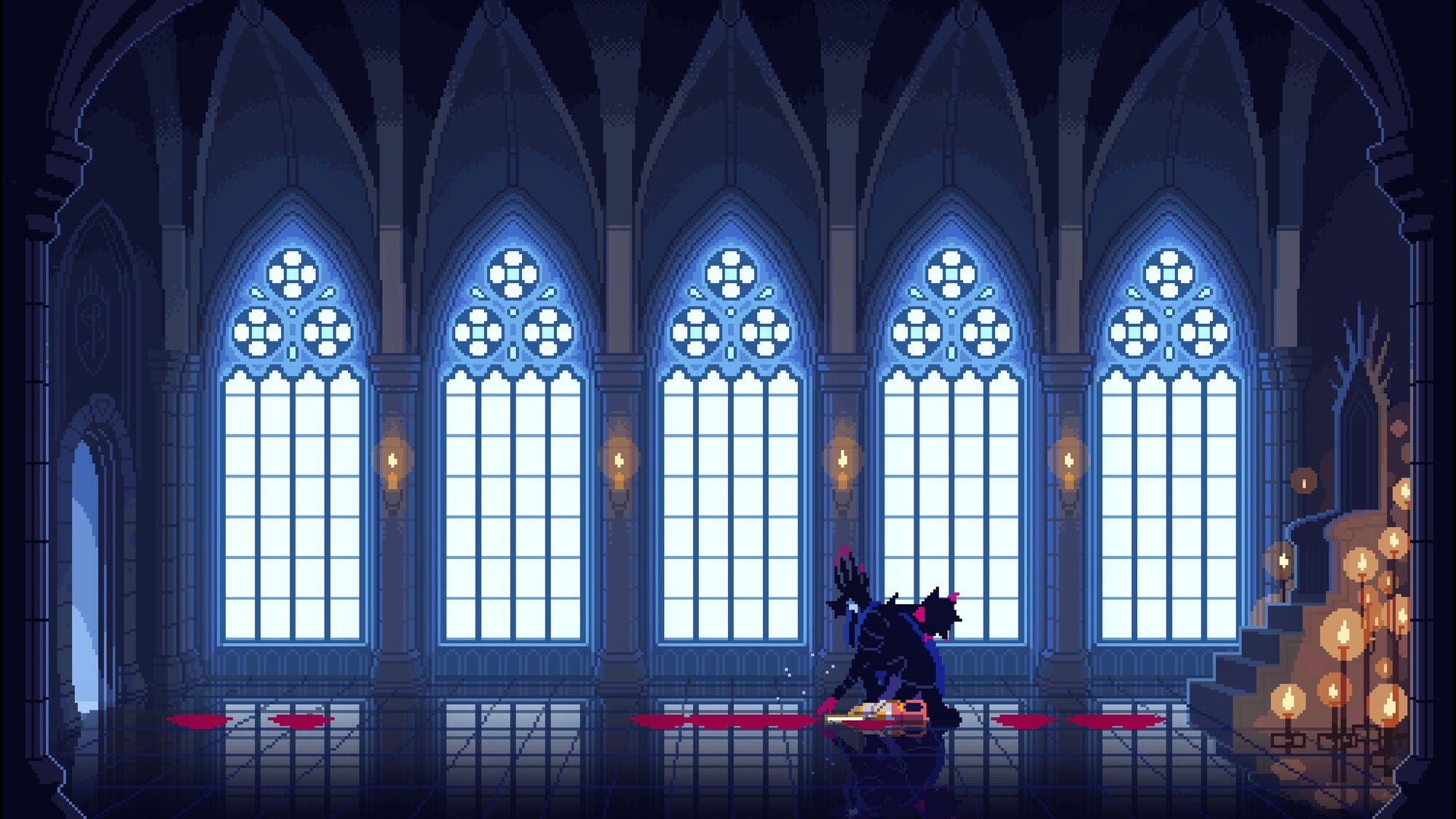
But deep down in my heart, I know it won’t last, and at some point it all starts to crumble. The intruder starts input reading, dodging attacks with ease and whittling down my health bar. Not even the Dark Queen’s classic phase two transformation is making a difference anymore. I still eke out a victory or two, but the writing is on the wall. And it feels terrible! It feels unfair! I am the one holding the controller, and video games are not allowed to be unfair. Even though I bought the game with the full knowledge that I would lose at the end, I’m once again resorting to calling out cheap tactics. That contradiction within myself – loving the narrative implications of losing but still being upset about it – has never been stronger, and it’s awesome. Eventually the hero succeeds, and The Dark Queen of Mortholme is no more. There are a lot of other fantastic themes that the game is riffing on, and I’d suggest playing the game and checking out dotzip podcast’s excellent episode for further discussion on those, but that contradiction is one of the things I keep coming back to, and I’ve felt it strongly in all of these games.
Throughout Pyre’s many rites come dozens of opportunities to lose, Many Nights a Whisper places its entire narrative stakes on a shot that you might miss, and it’s not even possible to win at the end of The Dark Queen of Mortholme. All three of these games are special experiences for many reasons, and I especially adore their unique takes on losing, but no amount of Understanding and Appreciating the Narrative Implications can fully overcome the snap-reaction to losing. At the beginning of this essay, I wondered if I would ever be okay in the moment, if my most primitive synapses will ever start sending the good-feelings neurotransmitters in that split-second after losing, and I think the magic 8-ball is is saying “don’t count on it”. In the moment, it will likely never feel good to lose. I’ll always scramble for an excuse, I’ll always blame it on poor teammate AI, frame-perfect input reading, a developer putting their thumb on the scales, whatever it takes, and that’s why these games are fascinating to me. The best art draws emotion out of its audience, and some of the most interesting games push back on the inherent expectations that I bring to each game I play. It won’t always feel good, but good art doesn’t always make you feel good. In the right hands, it’s ok for a game to piss me off and leave me feeling disappointed- and I even find myself seeking this out a bit more as time goes. .
I’m not saying that I need every game to be like this, but all three of the games mentioned in this piece left outsized impressions with me that more straightforward and comfortable games can’t really match. This is all part of many bigger conversations surrounding art that challenges its audience, how much video games need to cater to their players and so on and so on, but for now, I can’t wait for the next game to step up and challenge me like this…just give me a few minutes to cool down before you put a keyboard in front of me.
Big thank you to Flora Merigold for helping to edit this. Her writing at Epilogue Gaming is an inspiration to me, and I recommend it.
If you enjoyed this and would like to support me spending more time thinking, writing and talking about video games, please consider supporting on Patreon.